USE CASE

For legal teams

Defensible records instead of secondhand reconstruction
Insider risk reaches Legal as once something has already gone wrong. Security or HR brings you a suspicion and a folder of log exports, and you're asked whether it supports a demand letter, a termination, a notification, or nothing at all. The activity is weeks old, the record was assembled by another team for another purpose, and the remedies that depended on speed have already narrowed. Above changes that.

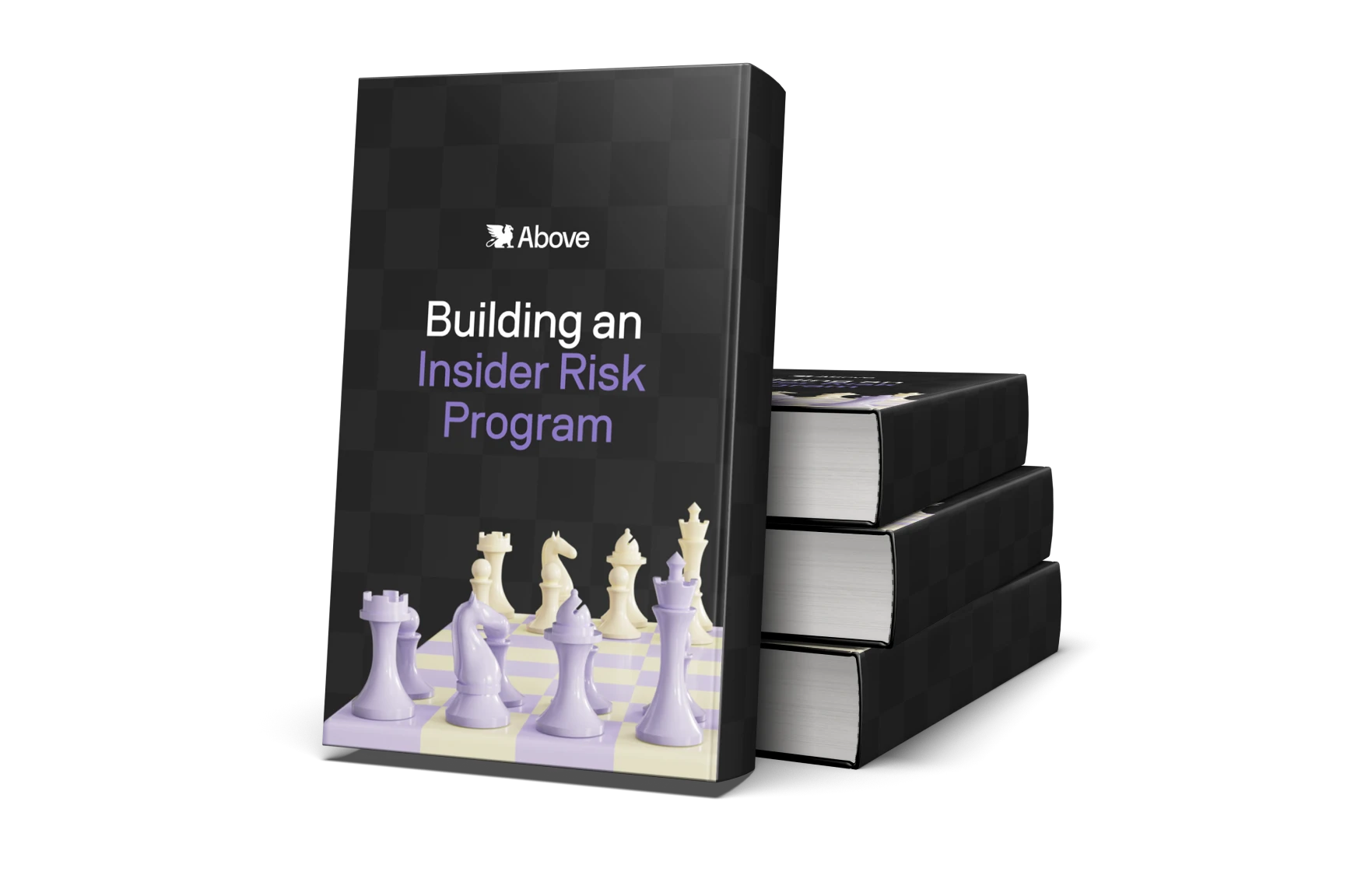
How to build an effective insider risk program

Phil Venables, former CISO of Goldman Sachs and Google Cloud, created a practical blueprint for what to stand up first, how to maintain employee trust, and KPIs to measure to prove program success.
Phil Venables
Get the guide
See it in action

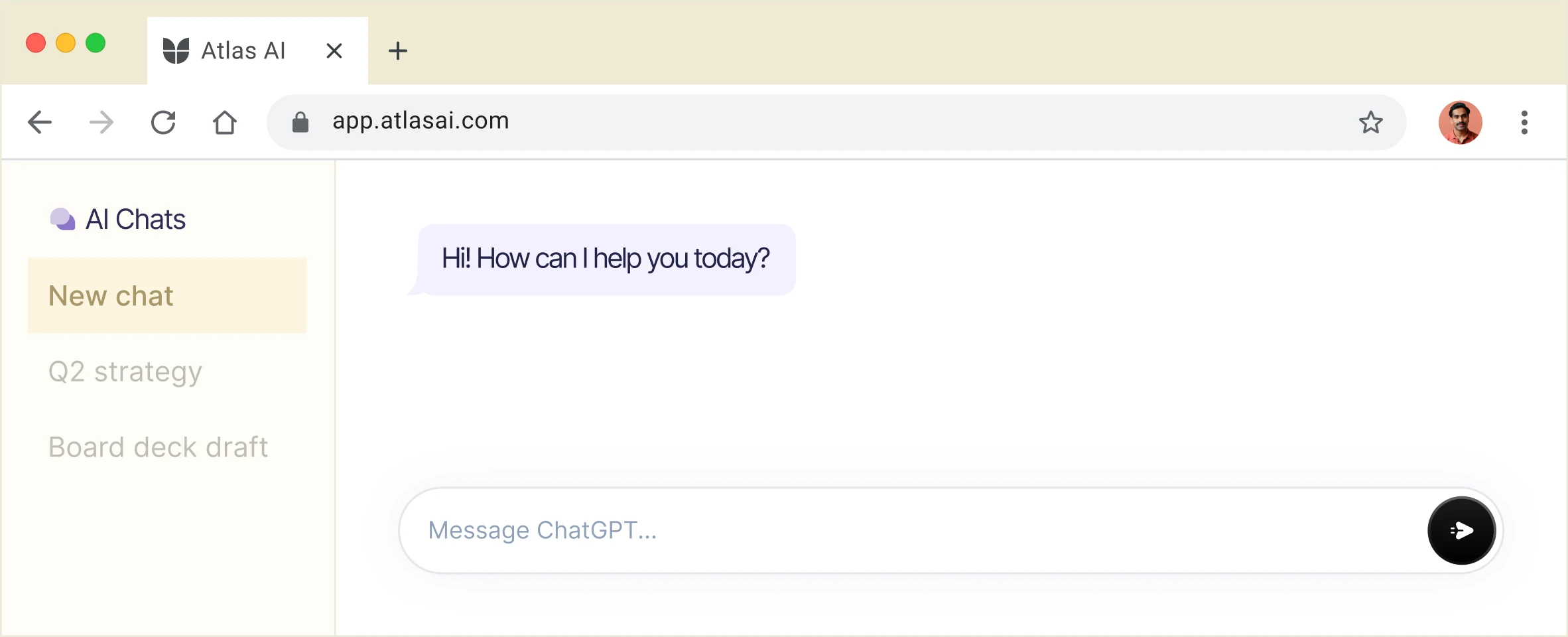
Guidance, the moment it matters

Scroll — watch a risky prompt meet a real Above nudge in the flow of work.

Legal’s key insider risk challenges

You're asked to make a legal call on someone else's reconstruction
The matter arrives as a conclusion, not a record. Someone else decided what was relevant, pulled what was accessible, and stopped when the story looked complete enough to escalate. You're then asked whether it supports action, without having controlled the scope, the sequence, or the questions that were never asked.
By the time you’re told, the clock has already been running
Preservation duties, contractual notification windows, the SEC's four-business-day disclosure requirement, GDPR's 72 hours. Average containment time for an insider incident is 81 days. By the time the matter reaches you, endpoints may have been reimaged, SaaS logs may have aged past retention, and the assessment window has already been spent.
Insider risk
You’re given a log export and told it’s evidence
Access logs show that a file was touched. They don't show what preceded it, what’s normal for the person, or what happened next. Without sequence, context, and intent, the record can't carry a misappropriation claim, survive a wrongful termination challenge, or support a materiality determination. It can only support a conversation.
Your organization is using AI agents, meaning confidentiality and privilege now depend on tools nobody reviewed
Employees are moving contracts, board material, and privileged analysis through consumer AI tools, personal accounts, and OAuth-scoped agents with no DPA, no confidentiality terms, and no retention commitments. Your insider population now includes non-human identities that never signed a policy. Every one of them is a potential waiver argument you'd have to make later.

The cost of inefficient or no action

Remedies expire while the facts are still being assembled
Injunctive relief depends on speed and specificity: what was taken, when, and by whom. Pre-departure staging is the most common critical insider pattern, and leavers are around 69% more likely to take data with them. Discovering it during offboarding means the data is already distributed, the person is already elsewhere, and the fastest remedy is already off the table.
Weak evidence sets your negotiating position
When the record can't show sequence, context, and intent, the response gets calibrated to what you can prove rather than what happened. Cases you should press get settled. Terminations you should defend get papered over. Trade secret protection turns on demonstrating reasonable measures, and a reactive program is a hard place to argue from.
Inconsistent enforcement can become the next claim
If you can only act on the matters you happened to catch, enforcement looks selective, and selective enforcement is the foundation of a discrimination, retaliation, or wrongful termination claim. The defense is a consistent process, applied evenly, with a documented basis for every decision. That's difficult to produce case by case, after the fact.

Every reactive matter becomes an unbudgeted engagement
Ponemon puts the average annual cost of insider risk at $19.5M per organization and $676,517 per incident, across roughly 13.5 incidents a year. Reactive programs pay all of it, and a share lands on Legal for outside counsel, forensic vendors, e-discovery, etc.

What’s my organization’s level of insider risk?

Determine your level of risk across 5 critical security pillars in 10 minutes or less. You get your score, plus optimization recommendations.
Take the free evaluation

How Above helps legal teams

Detect, investigate, and prevent insider threats
Arbiter Engine is the AI-native workflow layer underneath detection, investigation, and prevention.
Insider risk becomes a standing capability rather than a series of one-off engagements. Legal stops commissioning investigations and starts reviewing them, with a consistent process behind every matter that reaches you.
Learn More
Every incident, already investigated
A fleet of specialised AI agents- Shadow AI & IT, Data Exfiltration, Flight Risk, Inappropriate Use, Communications- reasoning continuously across identity, SaaS, endpoint, and data access.
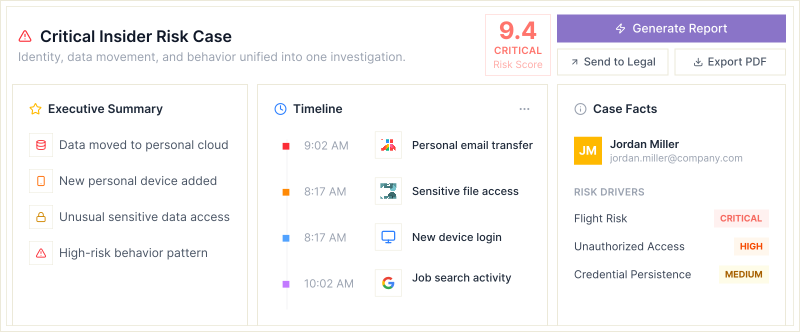
An allegation is a start, not a record. With Above, the matter arrives as a finished case: behavioral timeline, role context, the reasoning behind the classification, and a recommended action. You're assessing a record instead of building one.
Learn More
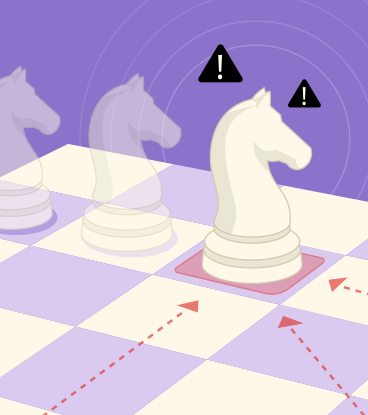
Stops risky moves before they’re made
Company-approved guidance surfaced inside email, SaaS, and AI tools at the moment a risky move takes shape.
Most insider risk is a well-meaning shortcut, and correcting it in the flow of work also puts notice and guidance where you'd want to point to it later. Costs a second and mitigates risky behavior before it can happen.
Learn More
A team-wide case management cockpit
Find finished cases, evidence, collaboration, and handoff in one place, The Investigation Workspace.
One record for Security, Legal, and HR instead of three partial ones, with role-based access and evidence-level preserved through handoff. The scope stays deliberate, and the version you act on is the version everyone else is looking at.

Learn More
Continuous investigations that update with new evidence
Evidence Graph follows the evidence, not the other way around. Activity is mapped across people, AI agents, applications, and data when it becomes relevant, and connects them as evidence arrives.

Above preserves the sequence as the picture develops, so the timeline holds when it's questioned. Above understands that new evidence can change both the investigation and the risk, which means the record reflects what was known and when.
Learn More
Integrations with your existing tools
Connections across cloud, identity, endpoint, SaaS, HR, AI, workplace tools, and more.
Above runs on the telemetry you already generate, querying your sources rather than duplicating them. No new repository of employee data to govern, justify, or produce.
Learn More
With Above, allegations become records, reconstruction becomes investigation, and Legal stops inheriting matters that are already too old to act on and starts making decisions while the full set of options is still open.

Turn insider risk into a security advantage

See how Above helps security teams detect, investigate and prevent insider threats -- without the manual work.
Request demo

Common questions

How does Above change my day-to-day?
You enter earlier, with a record instead of a rumor. Preservation and notification clocks start while you can still act on them. Decisions rest on sequence and context rather than on what the available logs happened to capture. And when Security and HR are involved, the handoff is a decision rather than a second investigation. Strategically, it moves Legal out of after-the-fact damage assessment and into a position where remedies are still on the table.
Is a platform like this lawful where we operate?
Above investigates behavior, not people, and it's built to be privacy-aware: no keystroke logging, no screen recording. It queries the sources you already maintain at runtime rather than pre-ingesting and warehousing employee activity, which keeps the data minimization and proportionality story straightforward. Access is role-based, so what Security sees, what HR sees, and what Legal sees can be scoped separately. That posture is what makes the works council conversation and the EU deployment conversation tractable, rather than a matter of arguing that surveillance was necessary.
Will the record hold up if it's challenged?
The value isn't a longer log. It's sequence, role context, and an explicit chain of reasoning behind every classification, assembled from source telemetry that stays in your systems of record. When you need to show what happened, in what order, and why it was treated as risk, that's the record you produce. When you need to show that the same process was applied to a comparable case, that's there too.
How is this different from the DLP and UEBA we already run?
DLP enforces policy on data movement; UEBA flags deviation from a statistical baseline. Both assume insider risk can be defined in advance, as a rule or as an anomaly. Neither produces something you can act on legally: a fired rule tells you a threshold was crossed, not what a person was doing or why. Above starts from a different premise, that insider risk is an investigation problem, not a policy problem. Keep DLP for the compliance job it does well. Above answers the question it was never built for.
Learn more about DLP and UEBA's blind spots
Doesn't this create more discoverable material?
The underlying telemetry already exists and is already discoverable. Above doesn't create a second copy of it; it queries what you retain and adds structure and reasoning on top. What changes is that the analysis is deliberate and consistent rather than improvised under time pressure, and that role-based access lets you keep scope and privilege boundaries where you intend them.

Every endgame starts with the right opening.

Most insider threats are preventable.
The difference is how you develop your material.
Ready to make your move?
Schedule demo

Contact us

You've made a great move.
We'll be in touch shortly

Close

Every endgame starts with the right opening.

Most insider threats are preventable.
The difference is how you develop your material.
Ready to make your move?
Schedule demo