
Above mentioned in Gartner's Secure Behavior Management research
Read more



Above Security Team
October 9, 2026

Above Security Team
Oct 09, 2026
When the news reports insider fraud, it tells vast stories of leadership and boards of directors who hold secret information about their company that allows them to trade stocks before announcements so that they can make or save millions of dollars. Realistically, most insider fraud consists of many insignificant transactions that appear normal when no context around intent exists.
Identifying fraud can be complicated. Individual signals may not trigger an alert and rarely explain why someone took an action. Understanding fraud means that the different teams involved in receiving alerts, investigating employee activities, and providing consequences have shared evidence about the event and can understand why it occurred.
Fraud is when a person or organization intentionally devices others by misrepresenting or concealing information with the goal of obtaining money, property, services, or other benefits. Unlike an error or accidental policy violation, fraud involves intent, so the person committing the act knows it is wrong and uses deception for their own benefit or to cause a loss for another party.
Fraud can occur inside and outside an organization. Insider fraud might be an employee submitting falsified invoices or expense reports, while external fraud looks like using stolen personal information to commit identity theft or financial fraud. While the specific conduct varies, determining whether a suspicious activity constitutes fraud requires understanding the context around the event, like circumstances or intent.
While the legal requirements for proving fraud in a court may change by jurisdiction, fraud typically involves several common elements:
Every fraud claim revolves around an action and an intent. While your tools may help you identify an unusual transaction or altered electronic files, investigators still need to understand the fraud perpetrator's intent when taking action.
People commit fraud for many reasons. However researchers and fraud examiners typically explain the conditions as the Fraud Triangle, the context that makes fraudulent behavior more likely. The model focuses on the three factors of pressure, opportunity, and rationalization.
The Fraud Triangle describes the three common conditions associated occupational fraud:
A common example of insider fraud is an employee who submits falsified travel expense reports and receipts to receive reimbursement for expenses they never incurred:
An employee manipulates a procurement AI agent to substitute a vendor that the employee secretly owns as a replacement for the organization’s preferred supplier. Since the organization authorized the agent to make supplier substitutions, the resulting purchase order initially appears legitimate. In reality, the AI agent acts on behalf of the employee committing fraud. In this case, the Fraud Triangle looks like this:
Fraud can happen from inside or outside an organization and take many different forms.
External fraud schemes typically seeks to steal money, credentials, personal information, or payment information and can include:
For many businesses, fraud involving trusted users and legitimate business systems can be difficult to identify because the activity initially appears authorized.
Sometimes called insider fraud, these activities occur when a trusted insider deliberately misuses their position for personal benefit. When an employee, contractors, executive, or other person already has legitimate system, data, and business process access, then the fraudulent actions can resemble normal work activity.
Occupational fraud can include:
While internal controls can reduce a trusted insider’s opportunities to perpetrate occupational fraud, investigators typically need information from multiple systems to distinguish authorized business activity from deliberate misuse.
Technology enables traditional and emerging forms of fraud by increasing the number of systems and identities that can participate in a transaction. To execute or conceal fraud, an insider might use:
Artificial intelligence (AI) complicates detection further because AI agents can perform actions on behalf of human users. While an AI agent does not intrinsically possess fraudulent intent, the person directing or manipulating it may use the agent to further a fraudulent scheme. When investigating fraud that uses AI agents, investigators need to determine:
Fraud is often difficult to detect because the individual actions may have legitimate explanations. The real challenge is extracting the fraudster’s intent based on context that can include information from human resources (HR) or external personal challenges.
Common warning signs of potential fraud include:
Fraud detection alerts the organization to activities that might require an investigation. However, the investigation provides documentation and evidence around:
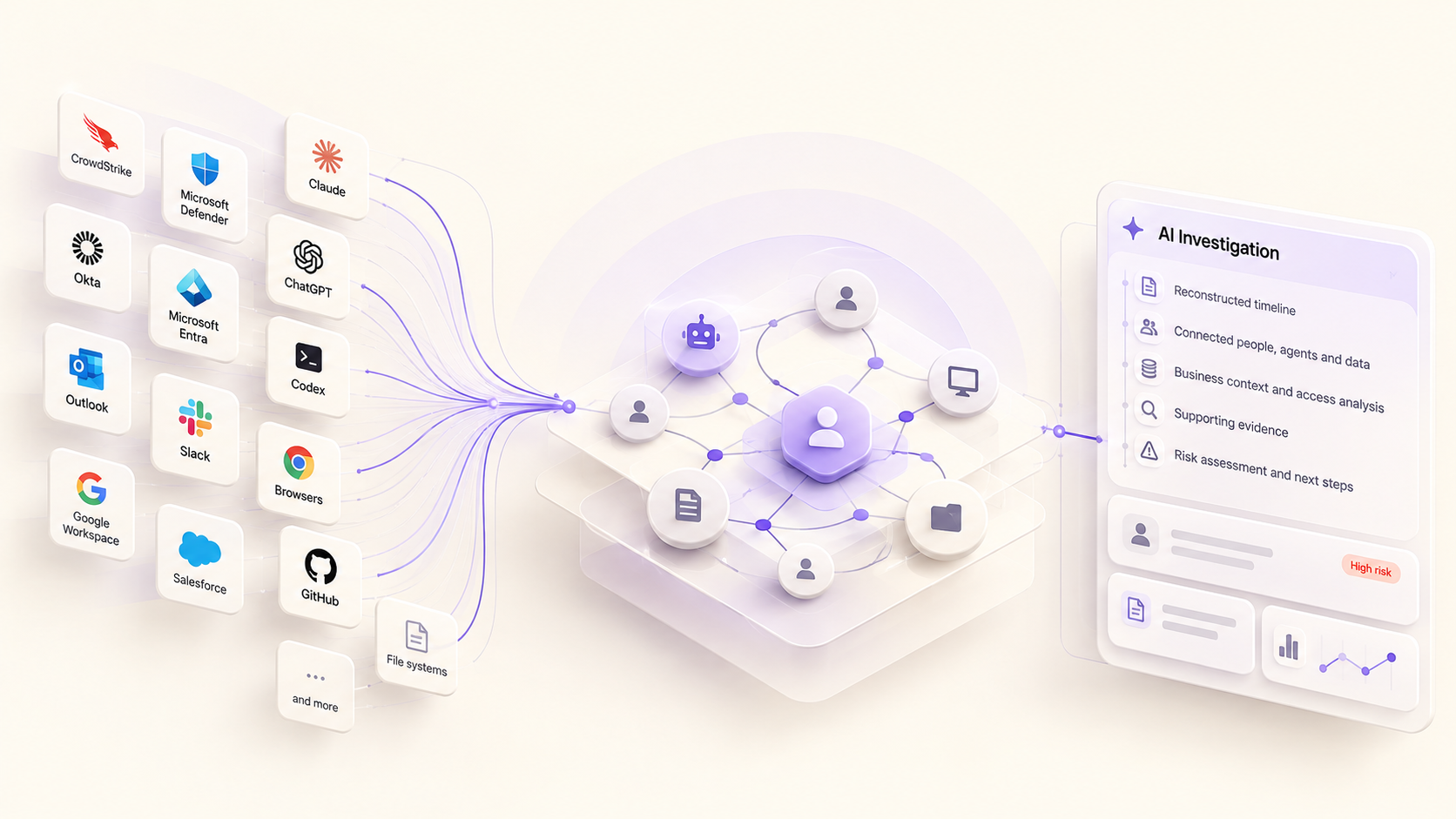
Effective fraud investigations may require organizations to correlate information from multiple sources, including:
Investigators often struggle to correlate this evidence and reconstruct the timeline when they have to evaluate each event in isolation. Returning to the manipulated AI agent example, the AI legitimately substituted one vendor for another, according to the purchase order. Investigators need evidence connecting the fraudster to the agent’s instruction to determine whether the transaction was part of a fraudulent scheme.
The core challenge that investigators face is that detecting an action is fundamentally different from establishing intent. Organizations need context to move from what happened and who caused it to why it happened and whether the evidence supports a finding of fraud.
Intent focuses on understanding why someone would engage in a fraudulent act. When trying to correlate the various data points, investigators can focus on the following questions:
tl;dr: Above turns scattered telemetry into defensible stories of intent, not just isolated events.
Above is an insider risk management platform built around narrative intelligence. Above's AI agents continuously observe how employees and their AI agents interact with data, apps, and AI tools to determine intent and intervene when a risky action is about to occur. Those signals get stitched into clear timelines that explain what happened, why it happened, and how risk evolved over time.
With in-the-moment coaching, and automatically produced investigation-ready narratives that security, legal, and HR can actually use.


May we use analytics cookies to understand visits, clicks and demo requests? Your choice won’t affect the site. No session recordings. Privacy policy